Redesigning Revolut’s home experience
A concept exploration into financial clarity, emotional engagement, and the future of travel-centred money management.
Oct 2025 | Research (Heuristic review, desk research, 5 user interviews), UX and UI design
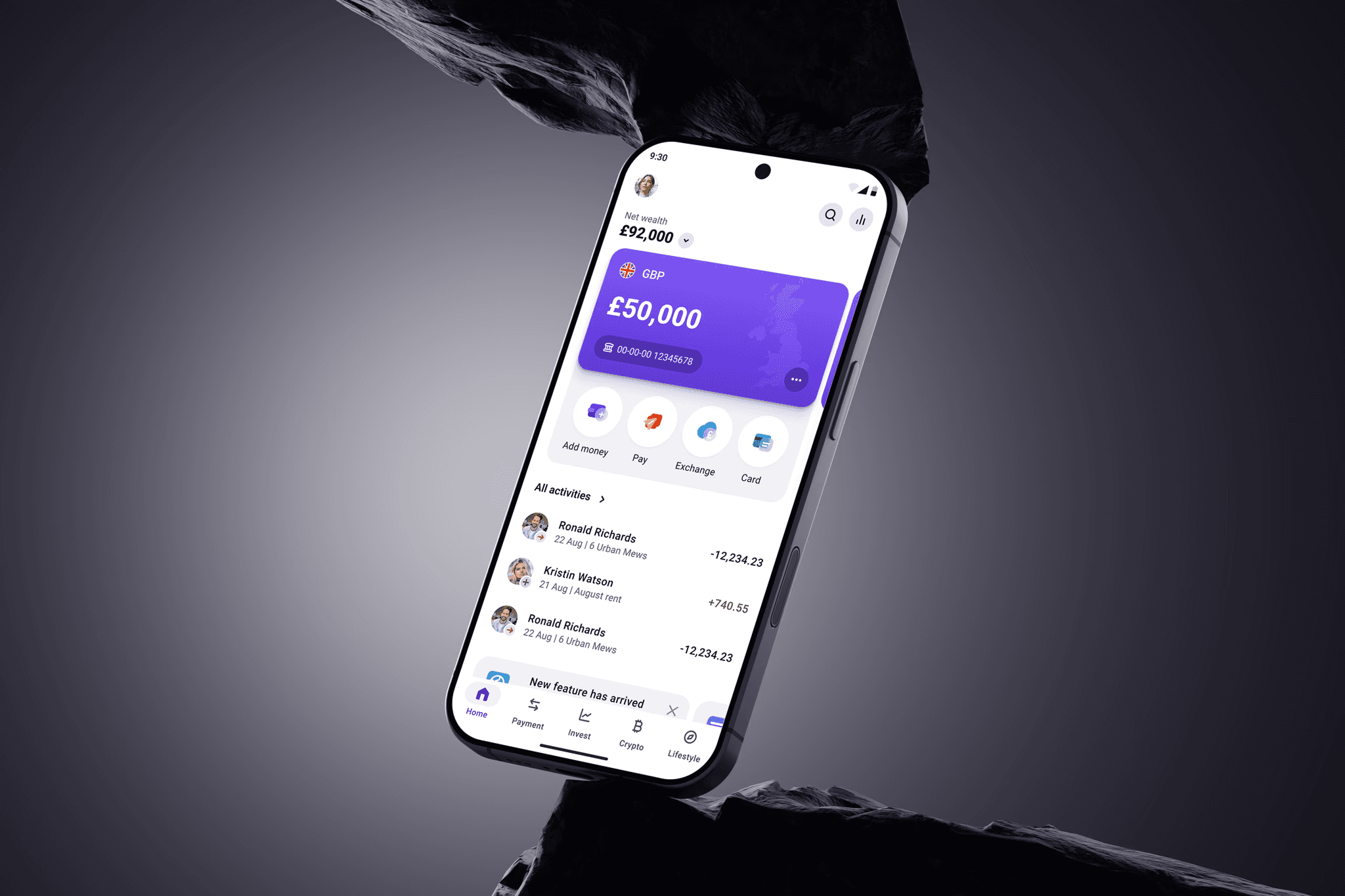
This started as a brief. It became a question.
The prompt was simple: Revolut's home experience lacks visual engagement. Redesign it.
But the more I looked at the screen, the more I realised the problem wasn't just visual. It was structural. The home screen was trying to be everything — balance, navigation, promotions, quick actions — without being particularly good at any of them.
So I started from scratch. Not with Figma, but with observation.
This started as a brief. It became a question.
The prompt was simple: Revolut's home experience lacks visual engagement. Redesign it.
But the more I looked at the screen, the more I realised the problem wasn't just visual. It was structural. The home screen was trying to be everything — balance, navigation, promotions, quick actions — without being particularly good at any of them.
So I started from scratch. Not with Figma, but with observation.
Discovery
What I saw
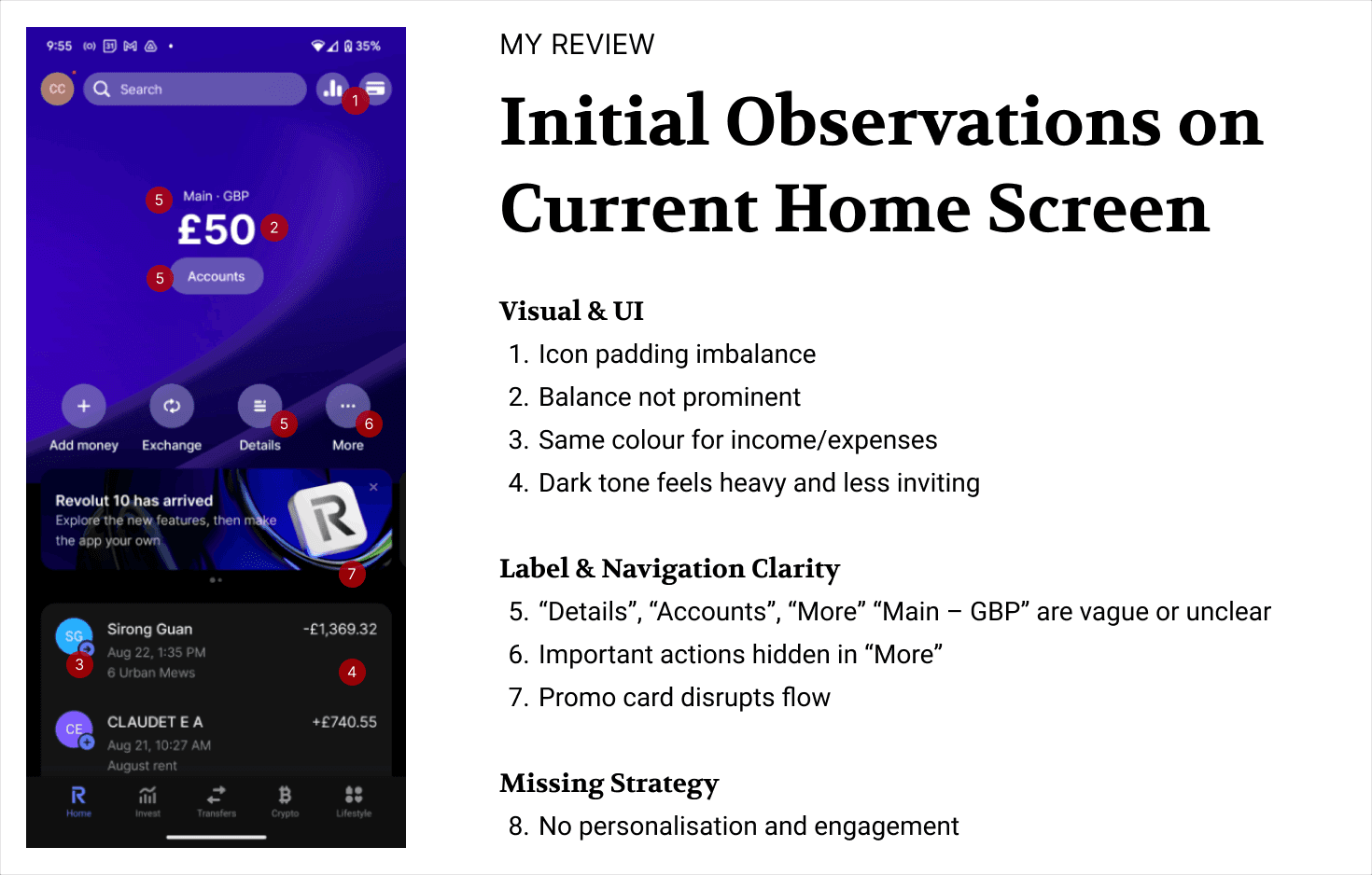
A heuristic review of the current home screen revealed a consistent pattern: the interface prioritises density over clarity.
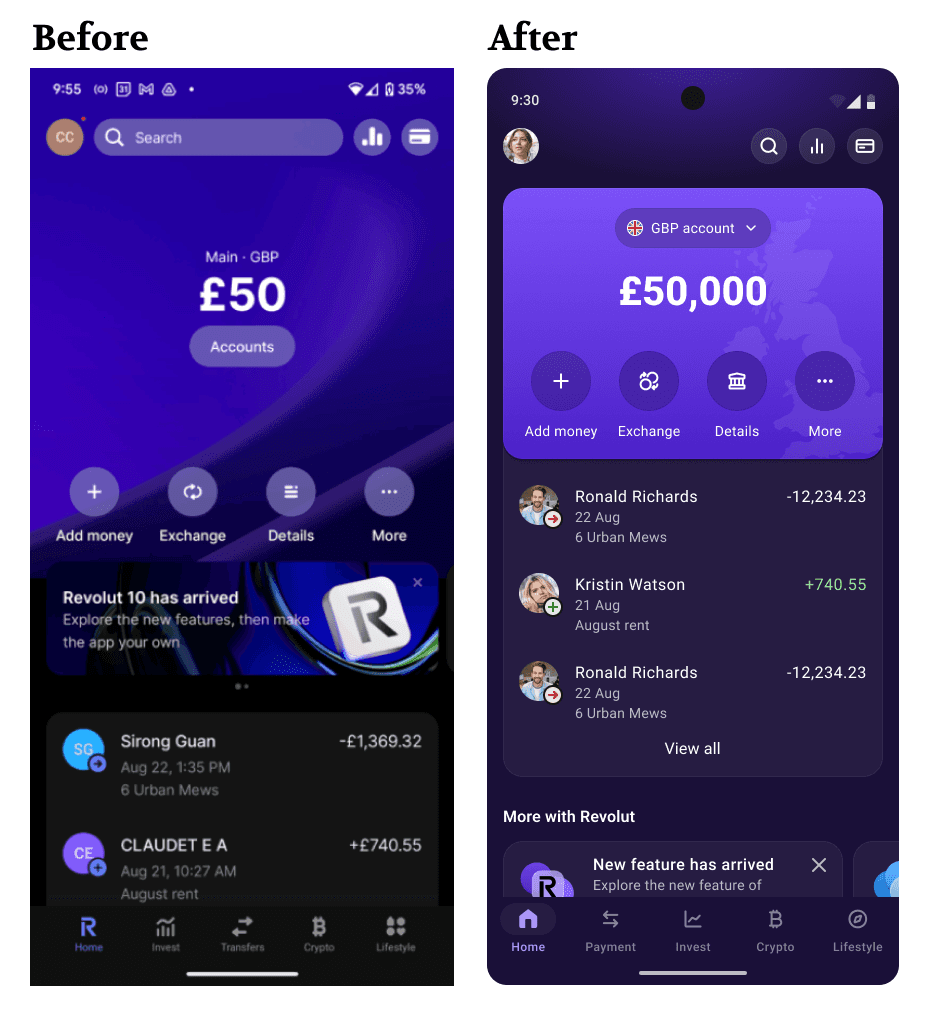
Balance figures lack visual prominence. Income and expenses are rendered in the same colour, making them indistinguishable at a glance. Key actions — including currency exchange — are buried behind a label that simply says "More." A promotional card sits in the middle of the screen, uninvited.
The dark tone, which should feel premium, instead feels heavy. The kind of interface you use, but don't enjoy.
What I saw
A heuristic review of the current home screen revealed a consistent pattern: the interface prioritises density over clarity.
Balance figures lack visual prominence. Income and expenses are rendered in the same colour, making them indistinguishable at a glance. Key actions — including currency exchange — are buried behind a label that simply says "More." A promotional card sits in the middle of the screen, uninvited.
The dark tone, which should feel premium, instead feels heavy. The kind of interface you use, but don't enjoy.
What research confirmed
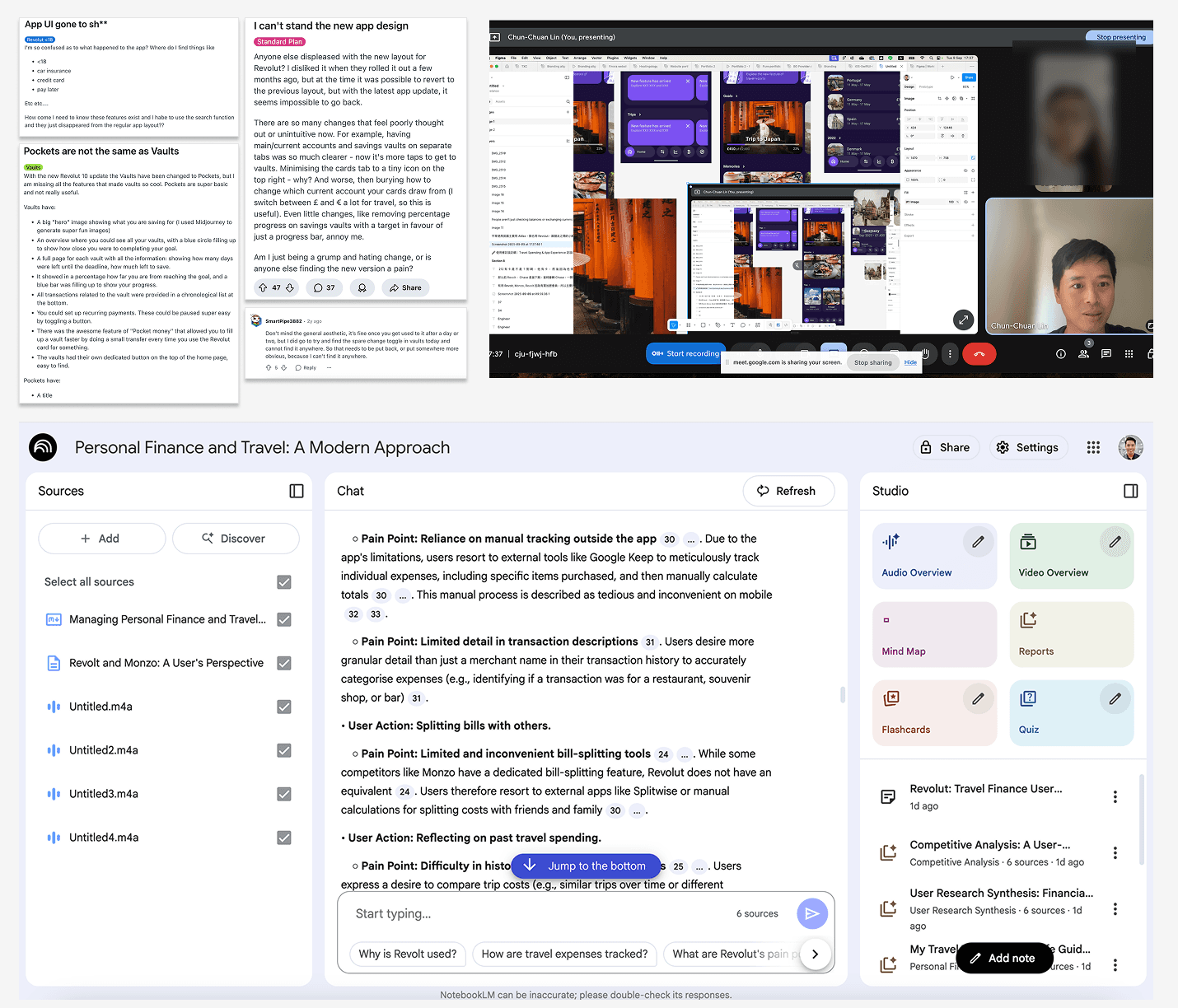
I conducted desk research alongside five user interviews to pressure-test whether these were real frictions or designer sensitivities. They were real. Three themes emerged consistently:
What research confirmed
I conducted desk research alongside five user interviews to pressure-test whether these were real frictions or designer sensitivities. They were real. Three themes emerged consistently:
Feature discoverability is low
Users frequently miss time-sensitive features like exchange rates.
Visual appeal feels flat
First impressions are neutral, but the interface fails to sustain engagement.
There's no financial context
Users want to understand their money in relation to goals or trips — not just as a running total.
1. Feature discoverability

“I want to know if the current rate is high or low and when I exchanged before, but the chart is hidden inside.”
– Female data analyst , 29

“Vaults now take more taps to reach, and card settings are buried behind a tiny icon. Switching between £ and € is no longer quick.”
– A user from Reddit
Visual appeal feels flat

“Design’s personal, but this feels plain. Moneybox’s fox is friendly, Monzo’s bold colours vibrant. Revolut wins on product, not design.”
– Female accountant, 34
No context or goal-based view

“I keep receipts and match them to transactions. But the Google Keep doesn’t help me sum it up.”
– Male engineer, 35
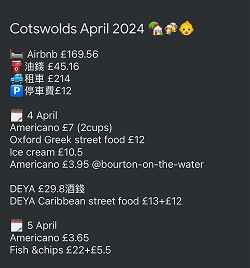
That last one stayed with me.
What others get right
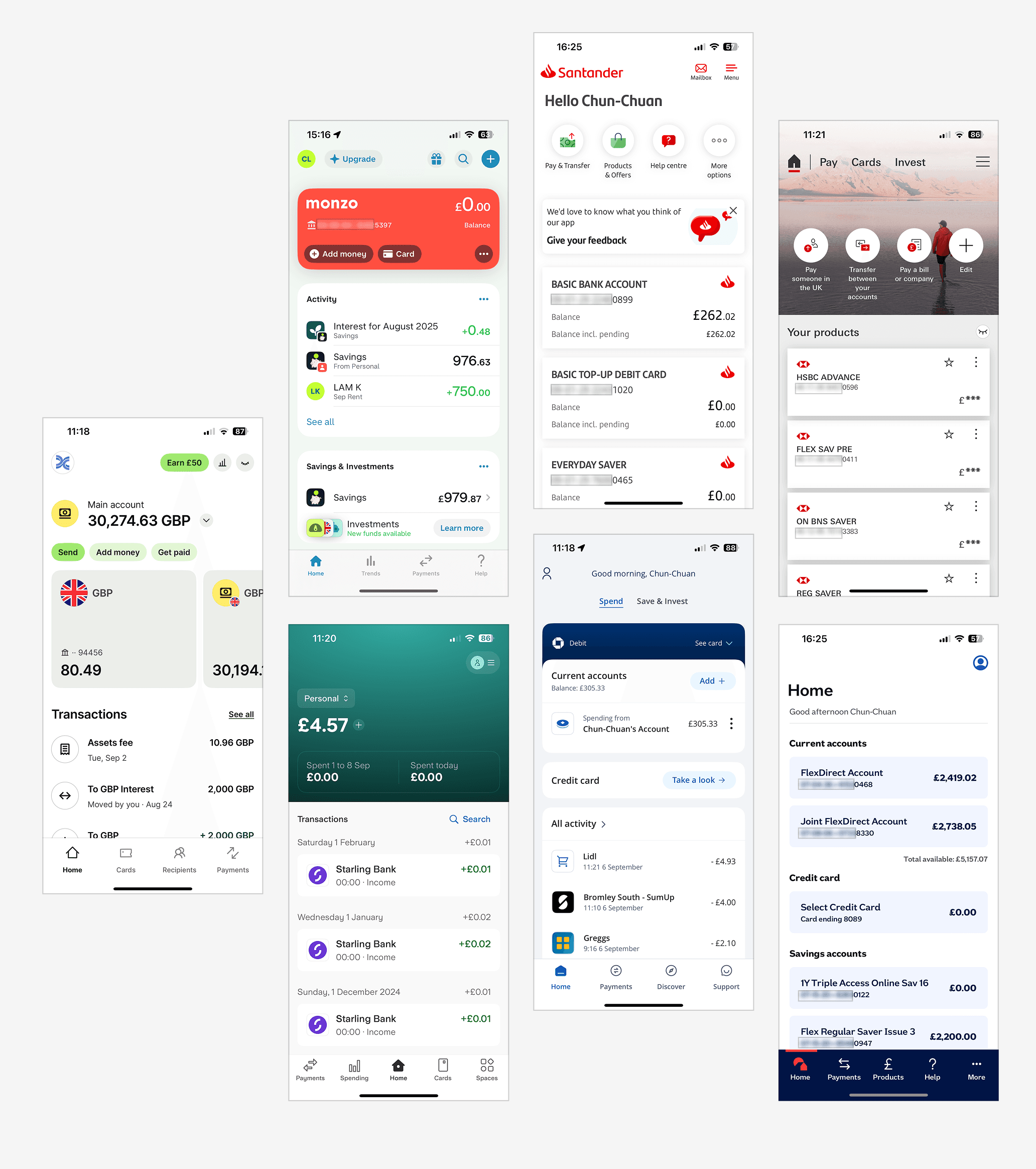
Competitor analysis reinforced the gap. Leading neobanks are moving toward personalised, goal-oriented home experiences — clear action hierarchies, welcoming visual tones, and light guidance for saving and exchange.
What others get right
Competitor analysis reinforced the gap. Leading neobanks are moving toward personalised, goal-oriented home experiences — clear action hierarchies, welcoming visual tones, and light guidance for saving and exchange.
Clear action hierarchy & personalisation
Clear understanding
Confidence without pressure
Action clarity
Strong brand colour and welcoming tone
Adoption & awareness
Behaviour change
Long-term outcome
Light guidance for saving & exchange
Improved AUM quality
Higher retention
Sustainable revenue growth
Insight
The insight that changed the direction
Almost every time users described a moment of genuine engagement with their finances, the context was the same: they were travelling.
Travel is when people spend the most, feel the most, and want to understand their money the most. Yet the current app treats a tea ceremony in Kyoto and a Netflix subscription with identical visual weight. There is no memory. No narrative. No sense that the app knows what the money meant.
The insight that changed the direction
Almost every time users described a moment of genuine engagement with their finances, the context was the same: they were travelling.
Travel is when people spend the most, feel the most, and want to understand their money the most. Yet the current app treats a tea ceremony in Kyoto and a Netflix subscription with identical visual weight. There is no memory. No narrative. No sense that the app knows what the money meant.
That realisation opened up three distinct design directions — each asking a different question about what a home screen is really for.
That realisation opened up three distinct design directions — each asking a different question about what a home screen is really for.
Design approach
Three directions. One through-line.
Rather than converging on a single solution, I explored three levels of ambition — from pragmatic to speculative — to demonstrate a range of strategic and creative thinking.
V1 Practical Enhancements — Fix what's broken. Incremental improvements ready for real-world launch.
V2 Iterative Vision — Elevate what exists. A more considered, elevated home experience.
V3 Travel as a Life Layer — Reimagine what's possible. A speculative concept built around travel as a life layer.
Three directions. One through-line.
Rather than converging on a single solution, I explored three levels of ambition — from pragmatic to speculative — to demonstrate a range of strategic and creative thinking.
V1 Practical Enhancements — Fix what's broken. Incremental improvements ready for real-world launch.
V2 Iterative Vision — Elevate what exists. A more considered, elevated home experience.
V3 Travel as a Life Layer — Reimagine what's possible. A speculative concept built around travel as a life layer.
Ready for Real-World Launch
Practical Enhancements
The first direction asks a deliberately constrained question: what is the minimum set of changes that would make this experience meaningfully better — without requiring a redesign mandate or new engineering infrastructure?
Ready for Real-World Launch
Practical Enhancements
The first direction asks a deliberately constrained question: what is the minimum set of changes that would make this experience meaningfully better — without requiring a redesign mandate or new engineering infrastructure?
Iterative Version: Clearer Wealth View & Faster Daily Actions
The changes are surgical but impactful:
Clearer hierarchy and button order — primary actions are visually prioritised
Stronger balance emphasis — the number you open the app to see is now the first thing you see
Better-organised labels and iconography — 'More' replaced with meaningful, scannable labels
Reduced disruption from promo card — contextual placement, not interruptive
Iterative Version: Clearer Wealth View & Faster Daily Actions
The changes are surgical but impactful:
Clearer hierarchy and button order — primary actions are visually prioritised
Stronger balance emphasis — the number you open the app to see is now the first thing you see
Better-organised labels and iconography — 'More' replaced with meaningful, scannable labels
Reduced disruption from promo card — contextual placement, not interruptive
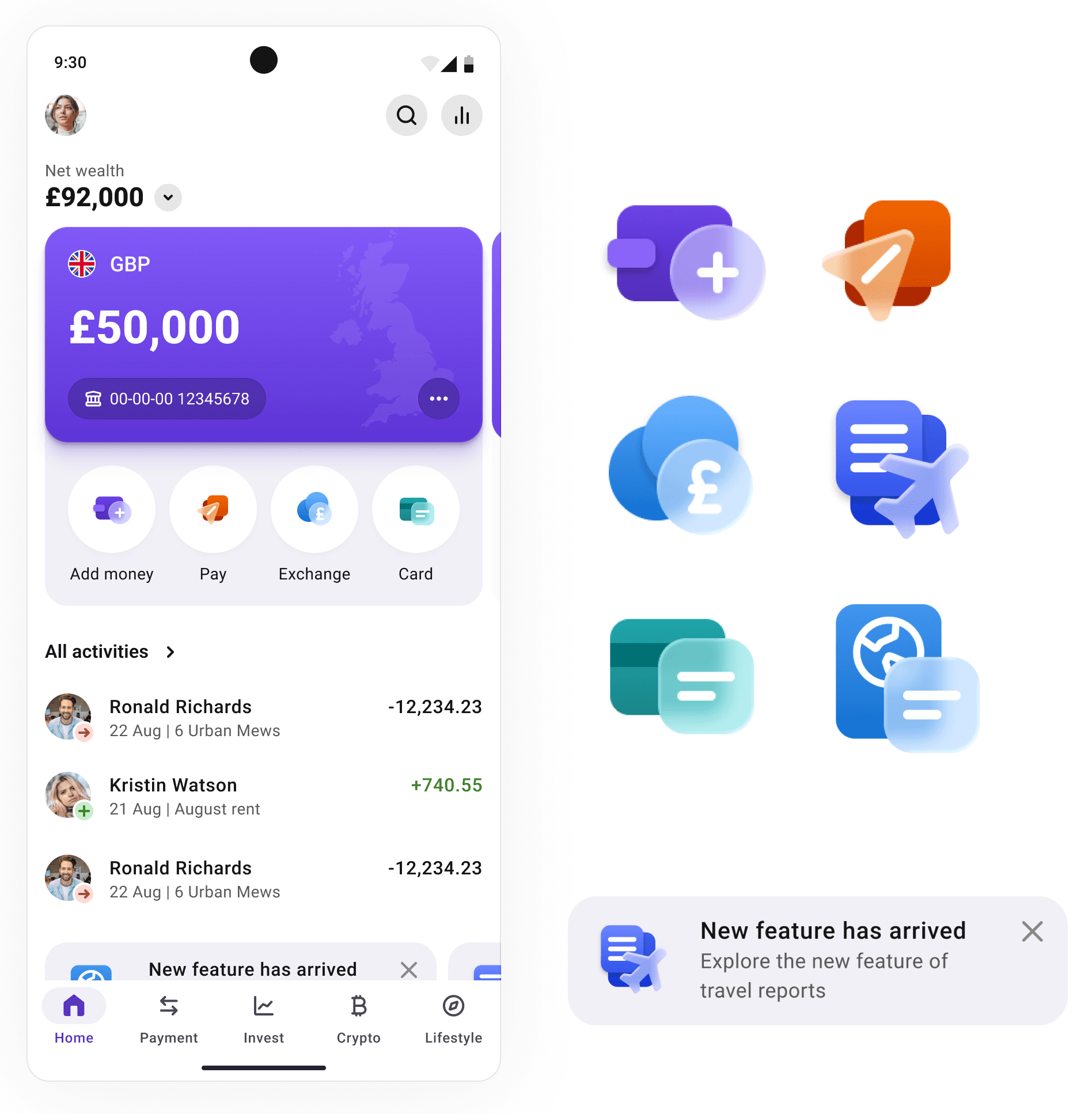
An iterative pass on V1 introduced a clearer wealth overview with top-level net worth, key actions surfaced for quicker access, and a light mode to improve contrast and daytime readability.
An iterative pass on V1 introduced a clearer wealth overview with top-level net worth, key actions surfaced for quicker access, and a light mode to improve contrast and daytime readability.
Version 3 - Travel as a life layer
From Transactions to Travel Stories
Version 3 is not a UI refresh. It is a strategic response to an unmet user need: the desire to understand money in context — specifically, the context of lived experience.
Travel is that context. It is when financial behaviour is most active, most emotionally charged, and most in need of guidance. Yet no major neobank has designed for this moment in a meaningful, end-to-end way.
From Transactions to Travel Stories
Version 3 is not a UI refresh. It is a strategic response to an unmet user need: the desire to understand money in context — specifically, the context of lived experience.
Travel is that context. It is when financial behaviour is most active, most emotionally charged, and most in need of guidance. Yet no major neobank has designed for this moment in a meaningful, end-to-end way.
Three core modules
Designing for travel, memories, and meaning
Travel isn’t just a cost — it’s an experience worth remembering, planning, and learning from.
Three core modules
Designing for travel, memories, and meaning
Travel isn’t just a cost — it’s an experience worth remembering, planning, and learning from.
🎯
Smart Saving
Set a travel goal and target amount
Link Vaults and enable auto-exchange
Smart alerts for deals on flights and accommodation
🧳
Travel Memories
Record expenses with notes and photos
Auto-organise by trip and category
Timeline-based memory highlights
🕰️
Travel Insights
Daily budgets during trips
Post-trip recap
Smart nudges for future goals
Home
Your money, your story — all in one place.
The Portfolio Health page is designed to translate complexity into understanding, surfacing risks, balance, and resilience in a way that informs users without telling them what to do.
Home
Your money, your story — all in one place.
The Portfolio Health page is designed to translate complexity into understanding, surfacing risks, balance, and resilience in a way that informs users without telling them what to do.
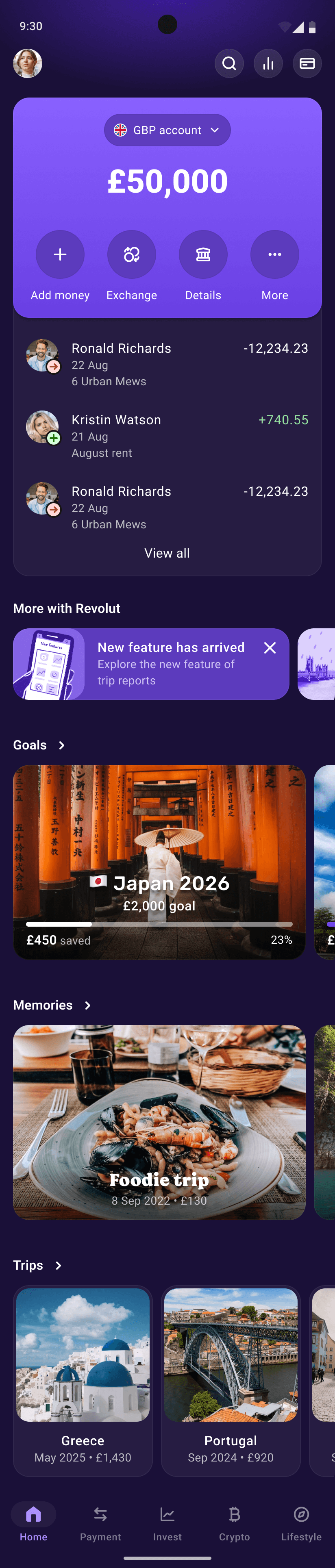
Overview & key actions
Overview & key actions
Your financial position, front and centre. Key actions surfaced where they're needed — no digging required.
Your financial position, front and centre. Key actions surfaced where they're needed — no digging required.
Recent transactions
Recent transactions
Ambient awareness of money in motion. Enough context to stay informed; one tap for everything else.
Ambient awareness of money in motion. Enough context to stay informed; one tap for everything else.
Promo cards
Promo cards
Feature discovery that earns its place. Contextual, not interruptive — shown below the fold, not above it.
Feature discovery that earns its place. Contextual, not interruptive — shown below the fold, not above it.
Goals
Goals
A number becomes a destination. Progress feels real when it's tied to somewhere you actually want to go.
A number becomes a destination. Progress feels real when it's tied to somewhere you actually want to go.
Memories
Memories
Trips as stories, not spreadsheets. A photo and a moment — the detail is one tap away.
Trips as stories, not spreadsheets. A photo and a moment — the detail is one tap away.
Trips
Trips
Your travel history at a glance. Scan, compare, and use the past to plan what's next.
Your travel history at a glance. Scan, compare, and use the past to plan what's next.
Trip
Every journey, worth remembering.
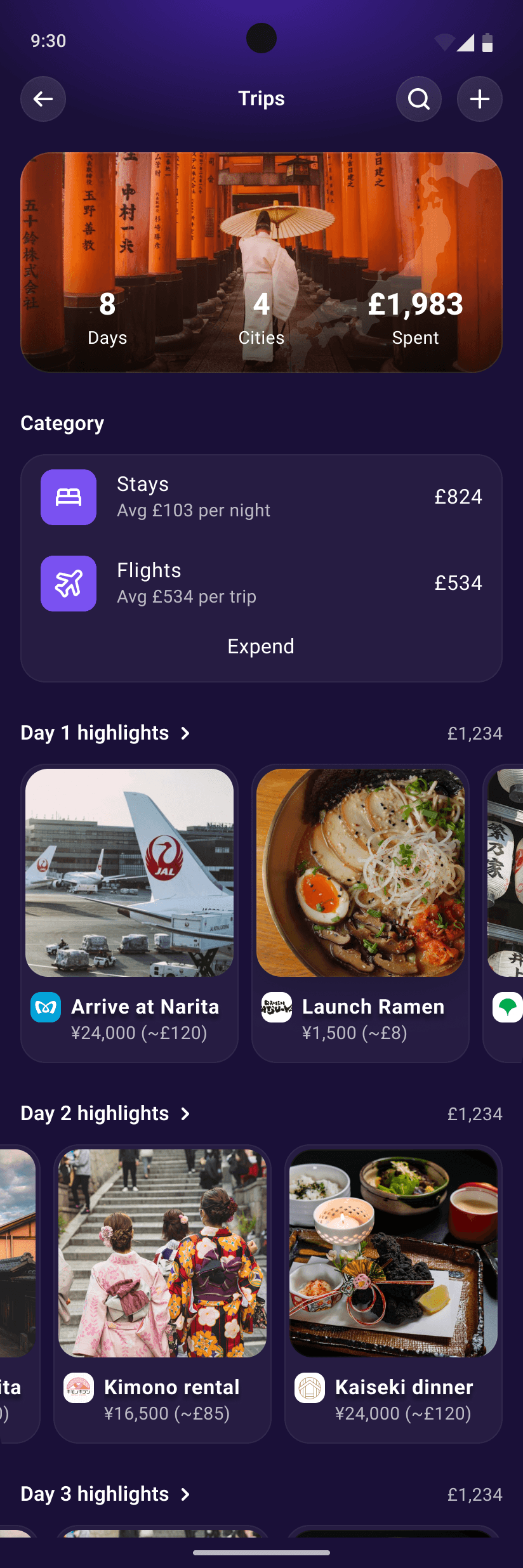
A trip isn't just a series of transactions — it's a story with a beginning, a middle, and a budget. The trip view turns spending data into a visual narrative: where you went, what you spent, and what made it worth it.
Trip
Every journey, worth remembering.
A trip isn't just a series of transactions — it's a story with a beginning, a middle, and a budget. The trip view turns spending data into a visual narrative: where you went, what you spent, and what made it worth it.
Overview
Portfolio overview
The trip at a glance — days, cities, and total spend in one frame. Enough to jog the memory before diving deeper.
The trip at a glance — days, cities, and total spend in one frame. Enough to jog the memory before diving deeper.
Category
Category
Where the money actually went. Spend broken down by type, with averages that make the next trip easier to plan.
Where the money actually went. Spend broken down by type, with averages that make the next trip easier to plan.
Journey
Journey
Every day, captured as a highlight reel. Transactions become moments — anchored by photos, places, and the things worth remembering.
Every day, captured as a highlight reel. Transactions become moments — anchored by photos, places, and the things worth remembering.
User journey
Lena's Journey
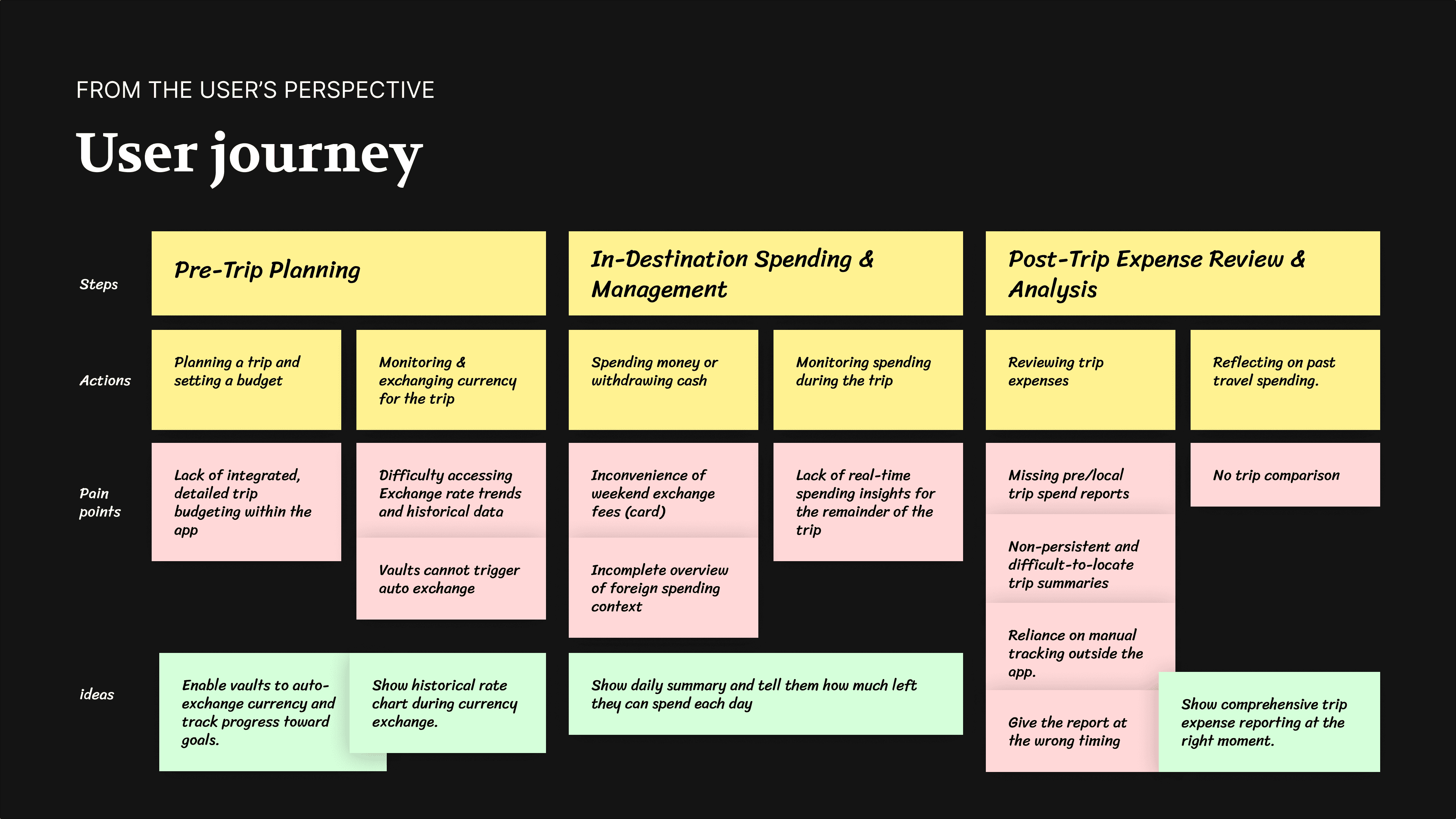
To make the concept tangible, I mapped a single user — Lena — across the full lifecycle of a trip. The scenario is not a persona exercise. It is a design stress-test: does each feature earn its place at each stage of the journey?
Lena's Journey
To make the concept tangible, I mapped a single user — Lena — across the full lifecycle of a trip. The scenario is not a persona exercise. It is a design stress-test: does each feature earn its place at each stage of the journey?
Before the trip
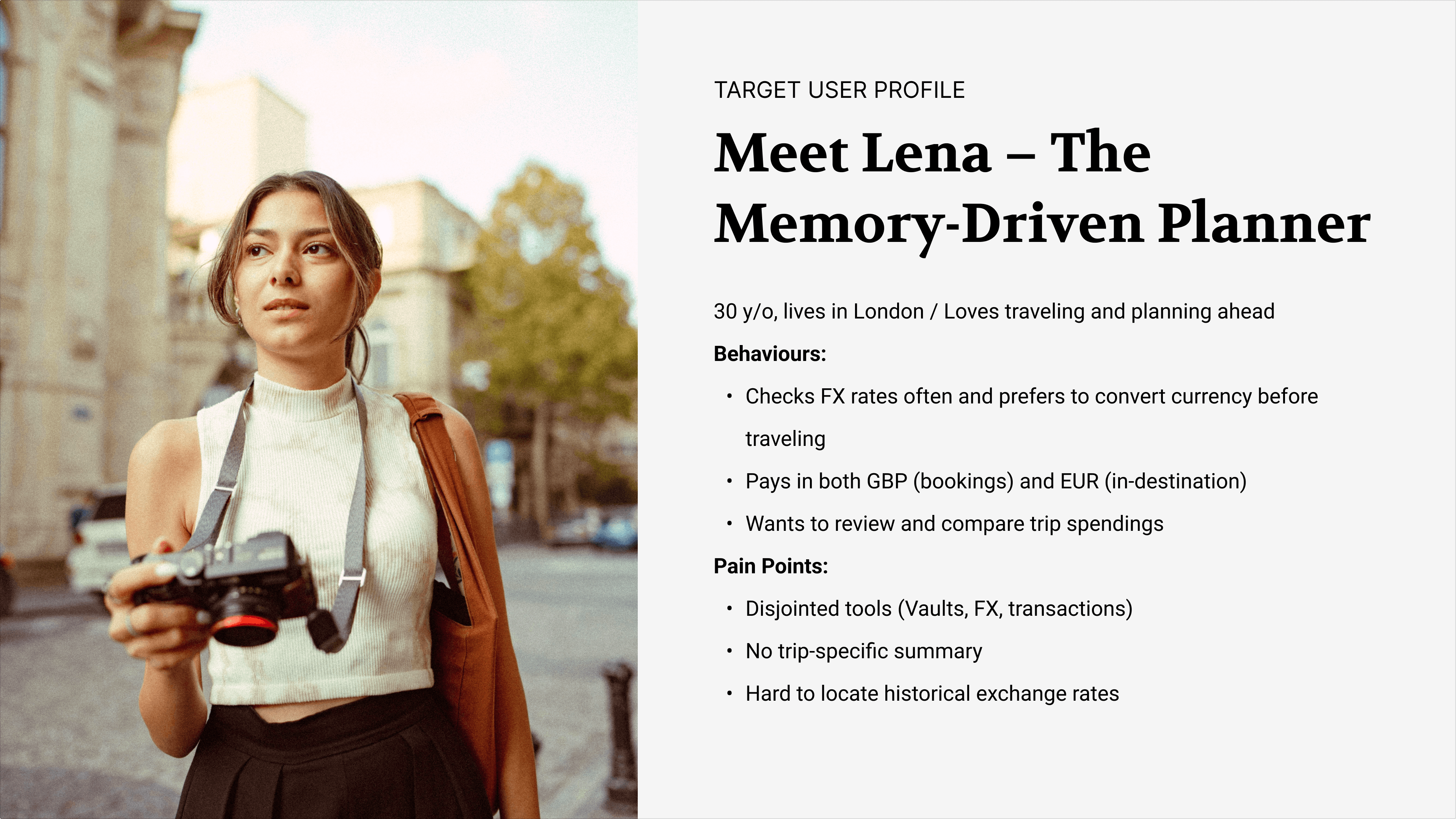
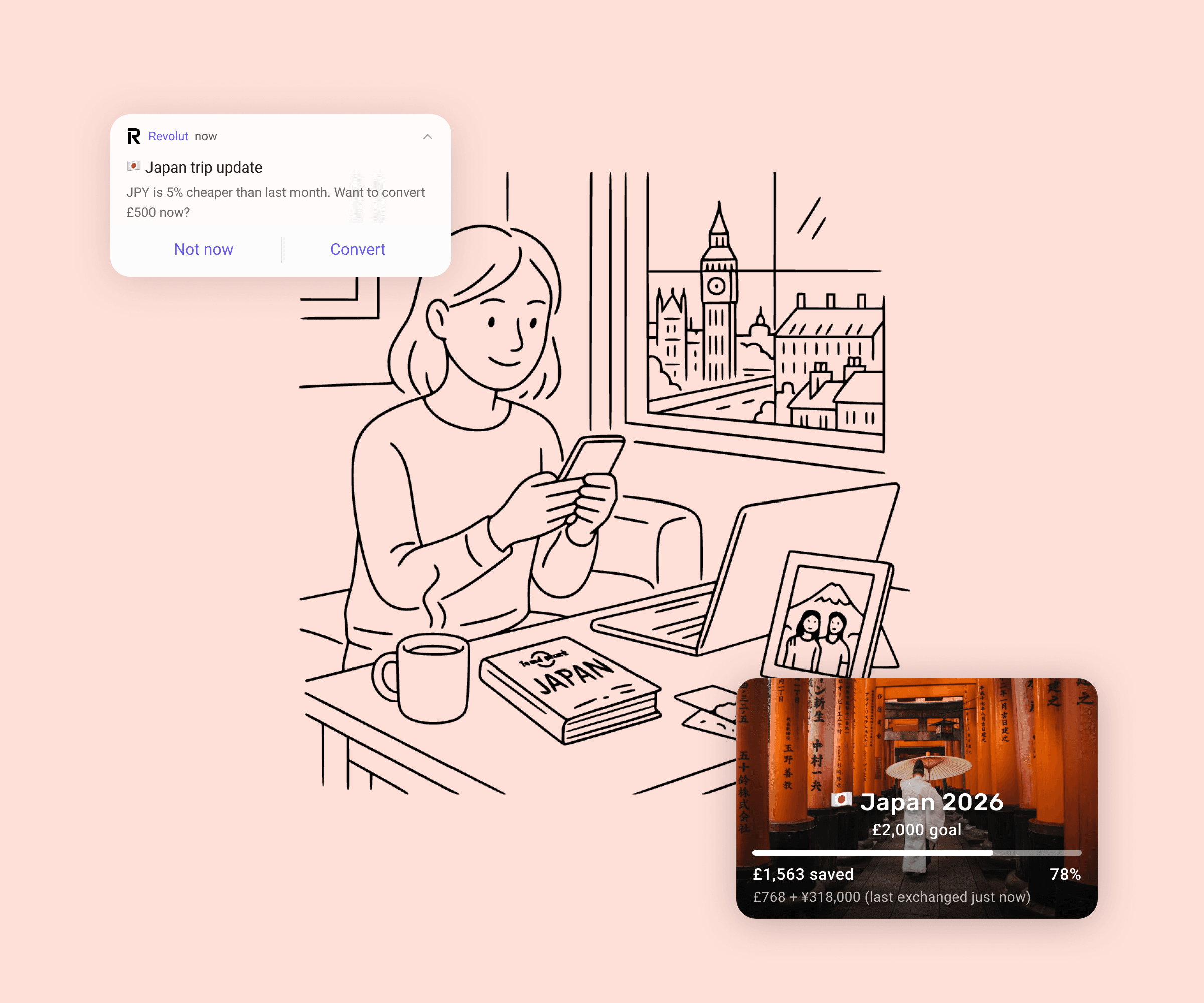
Lena is planning her next adventure — 8 days in Japan.
She opens the app and sets up a new goal:
🇯🇵 "Japan 2026 · £2,000"
She links her Vault to this goal and turns on Auto Exchange.
While browsing flights, she sees a notification:
💬 “JPY is 5% cheaper than last month. Want to convert £500 now?”
She locks it in with one tap. The app adds it to her Japan Travel.
Before the trip
Lena is planning her next adventure — 8 days in Japan.
She opens the app and sets up a new goal:
🇯🇵 "Japan 2026 · £2,000"
She links her Vault to this goal and turns on Auto Exchange.
While browsing flights, she sees a notification:
💬 “JPY is 5% cheaper than last month. Want to convert £500 now?”
She locks it in with one tap. The app adds it to her Japan Travel.
During the trip
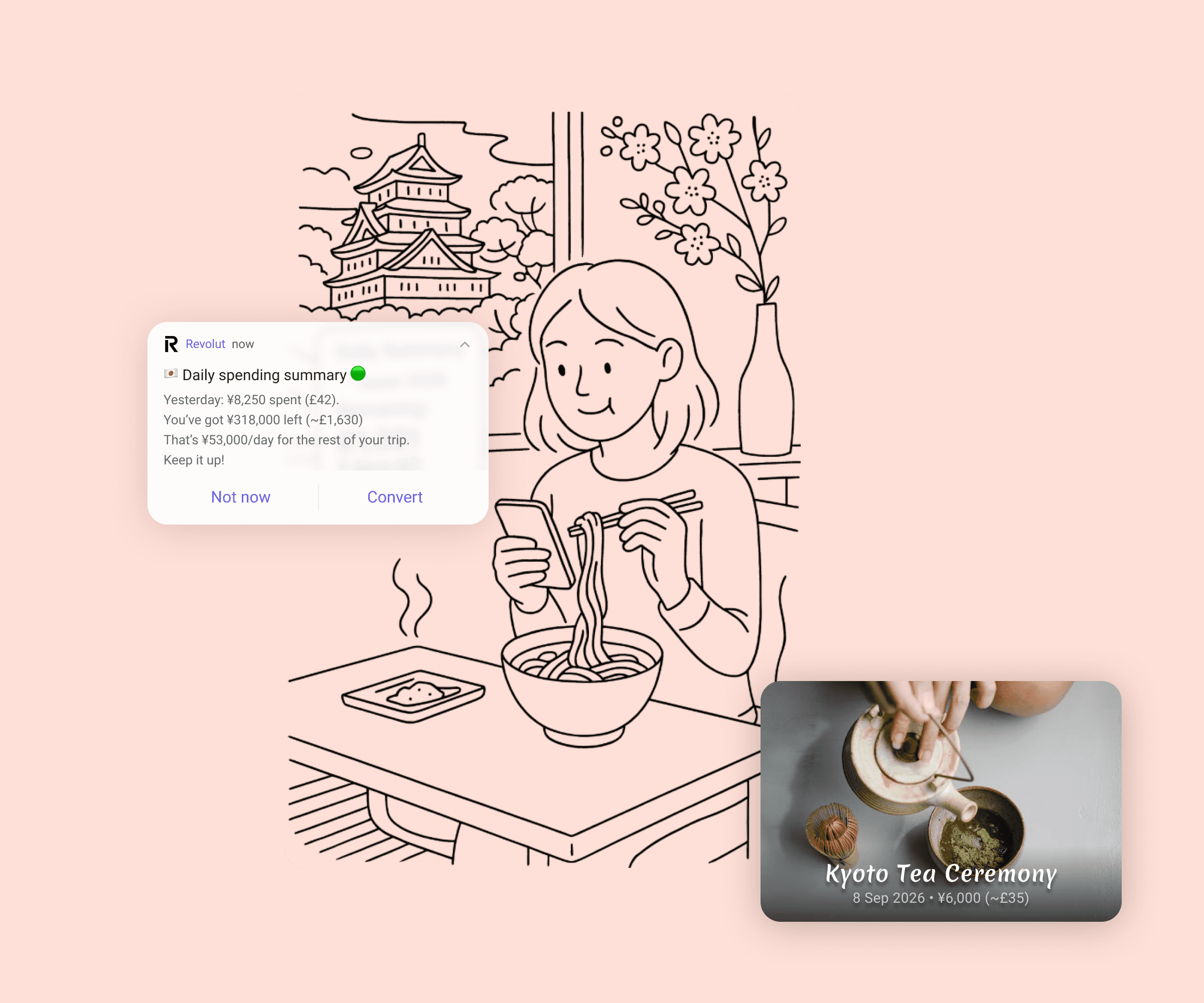
She gets a daily summary every morning:
“Yesterday: ¥8,250 spent. You have ¥318,000 left, about ¥53,000/day.”
She also adds a note and photo to one large transaction:
🍵️ “Kyoto Tea Ceremony - peaceful and unforgettable.”
The app saves it as a Memory Moment.
During the trip
She gets a daily summary every morning:
“Yesterday: ¥8,250 spent. You have ¥318,000 left, about ¥53,000/day.”
She also adds a note and photo to one large transaction:
🍵️ “Kyoto Tea Ceremony - peaceful and unforgettable.”
The app saves it as a Memory Moment.
After the trip
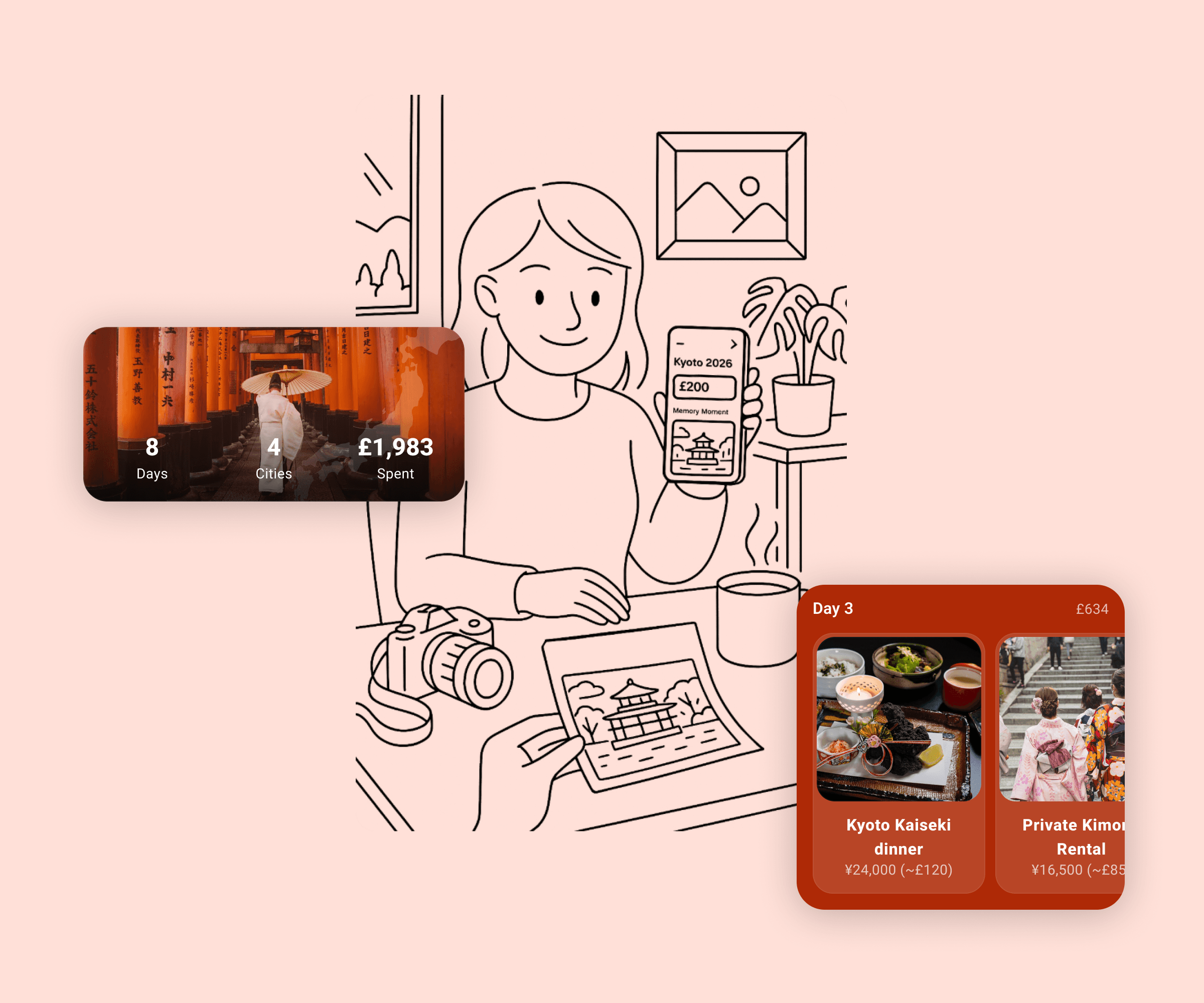
Lena arrives back in London. A few days later, the app notifies her:
“Your trip to Japan cost £1,983 across 21 transactions. Want to relive it?”
She opens a visual report with tagged expenses, photos, and a chart comparing her budget vs actual spend.
She shares the summary with her friends when someone asks, “How much did you spend?”
After the trip
Lena arrives back in London. A few days later, the app notifies her:
“Your trip to Japan cost £1,983 across 21 transactions. Want to relive it?”
She opens a visual report with tagged expenses, photos, and a chart comparing her budget vs actual spend.
She shares the summary with her friends when someone asks, “How much did you spend?”
A few months later
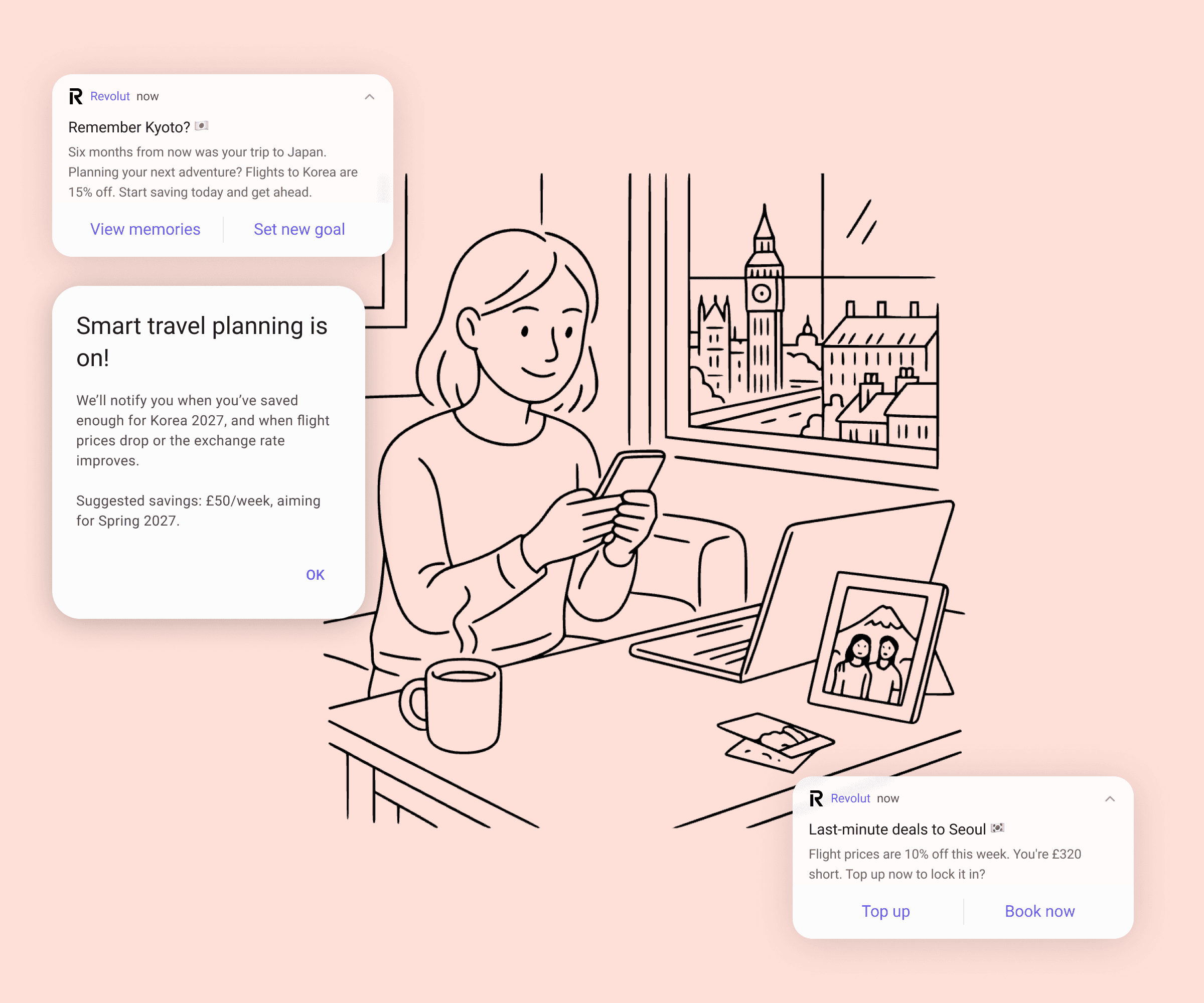
Later, the app reminds her:
“Half a year since Japan. Ready to start your next chapter?
Start saving for Korea now while flights are still low.”
She taps "Yes", names it: "Korea 2027", and begins saving again.
A few months later
Later, the app reminds her:
“Half a year since Japan. Ready to start your next chapter?
Start saving for Korea now while flights are still low.”
She taps "Yes", names it: "Korea 2027", and begins saving again.
Strategic value
Why this matters
Version 3 is not just a UI concept. It is a response to three business risks that a purely cosmetic redesign would not address.
Hidden FX features reduce monetisation of Revolut's core exchange product
Flat emotional experience creates vulnerability to competitors with stronger brand hooks (Monzo, N26)
No goal-based view reduces user motivation to save — limiting vault and premium tier adoption
The design responds directly: V1 and V2 address clarity and discoverability. V3 addresses emotional connection, savings motivation, and long-term retention through a travel-centred life layer.
Why this matters
Version 3 is not just a UI concept. It is a response to three business risks that a purely cosmetic redesign would not address.
Hidden FX features reduce monetisation of Revolut's core exchange product
Flat emotional experience creates vulnerability to competitors with stronger brand hooks (Monzo, N26)
No goal-based view reduces user motivation to save — limiting vault and premium tier adoption
The design responds directly: V1 and V2 address clarity and discoverability. V3 addresses emotional connection, savings motivation, and long-term retention through a travel-centred life layer.
🧱
Challenges
Hidden FX features
Flat UI
Weak emotional hook
Risk of user churn due to unmet needs
🙋♀️
User Need
Make spending feel meaningful
Stay motivated to save
Feel emotionally connected
Reduce cognitive load
🛠️
Travel Insights
V1 & V2: UI clarity & discoverability.
V3: Travel-focused memories, smart savings, timely insights.
Reflection
What this is
This is a concept project. Version 3 is not a product spec — it is a provocation. An attempt to explore what financial software could feel like when it respects not just your budget, but your experiences.
The research conducted — 5 user interviews and desk research — is directionally useful but not statistically significant. The design decisions are grounded in observable patterns, not validated through usability testing.
What this is
This is a concept project. Version 3 is not a product spec — it is a provocation. An attempt to explore what financial software could feel like when it respects not just your budget, but your experiences.
The research conducted — 5 user interviews and desk research — is directionally useful but not statistically significant. The design decisions are grounded in observable patterns, not validated through usability testing.
What comes next
Usability test V1 & V2 changes with Revolut users to validate hierarchy decisions
Prototype the V3 goal-setting flow and test discoverability of travel features
Validate the Memory Moments concept — is it compelling enough to sustain engagement, or a novelty?
Explore the tension between Revolut's dark, premium brand and the warmer, lighter tone this concept suggests
What comes next
Usability test V1 & V2 changes with Revolut users to validate hierarchy decisions
Prototype the V3 goal-setting flow and test discoverability of travel features
Validate the Memory Moments concept — is it compelling enough to sustain engagement, or a novelty?
Explore the tension between Revolut's dark, premium brand and the warmer, lighter tone this concept suggests


